
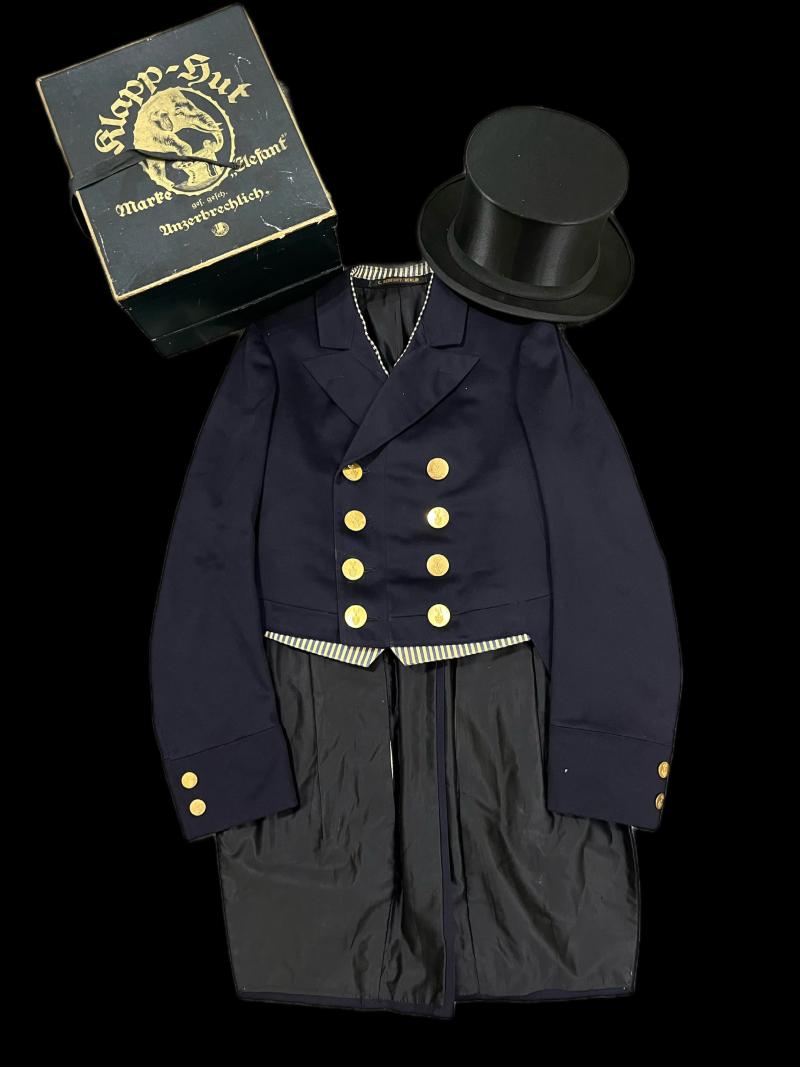
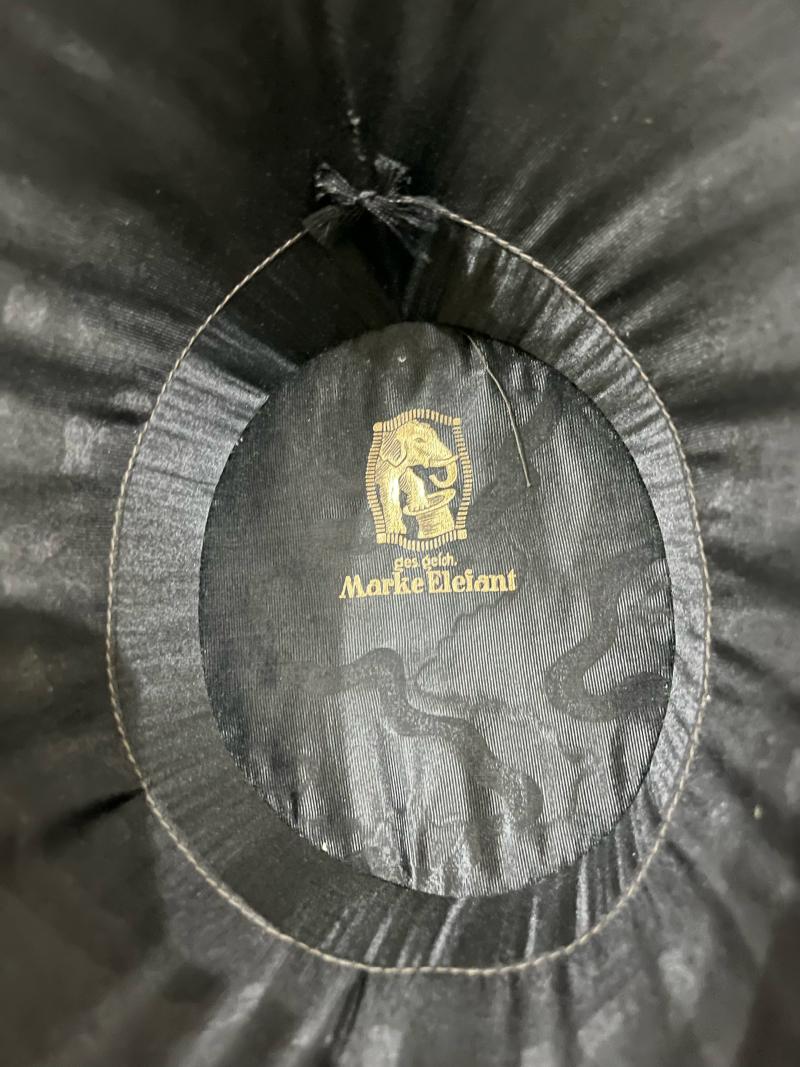
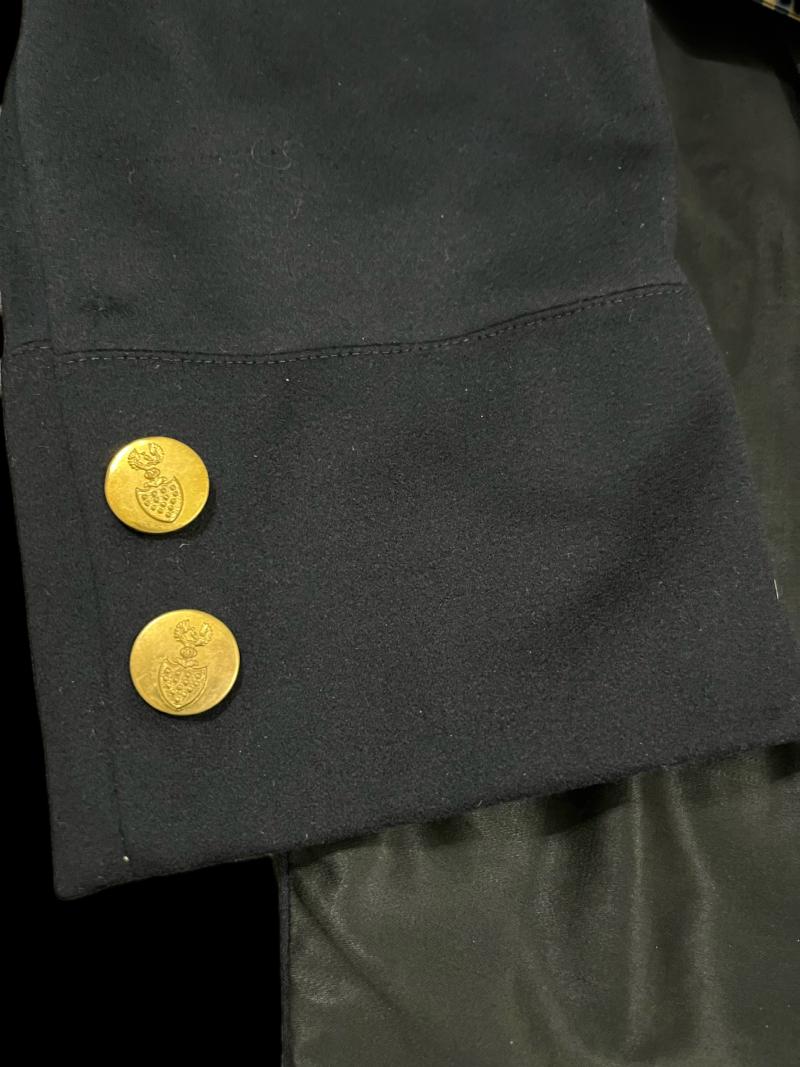
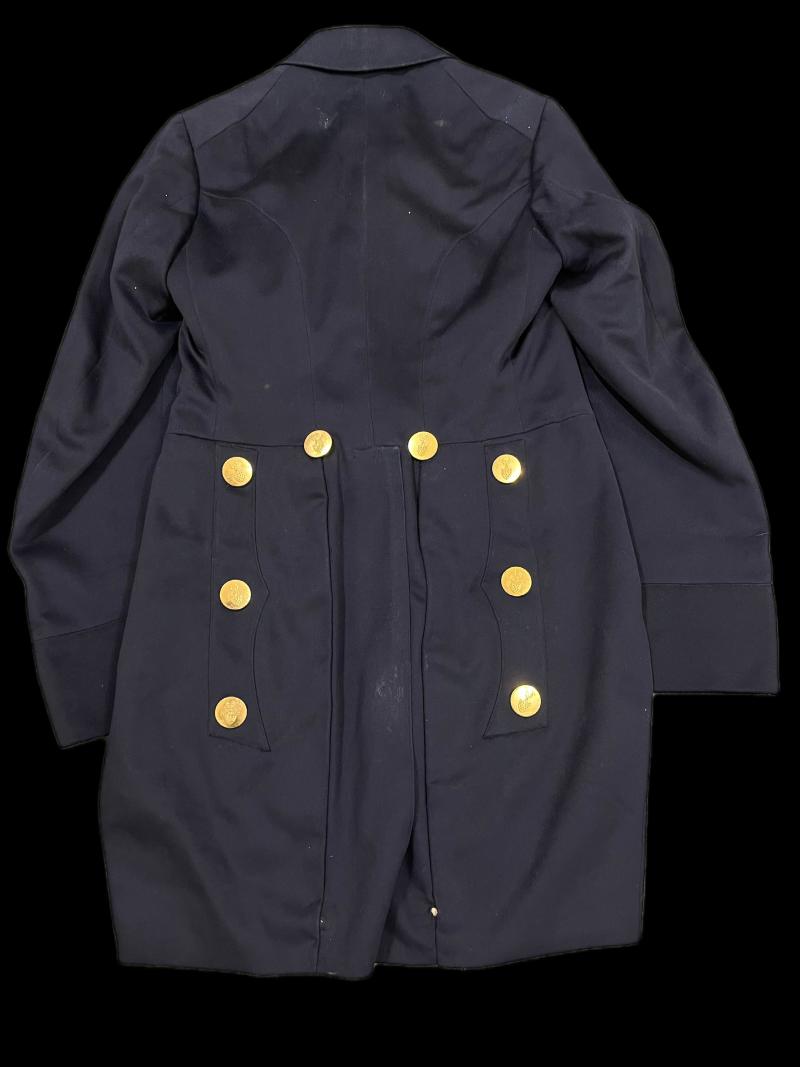
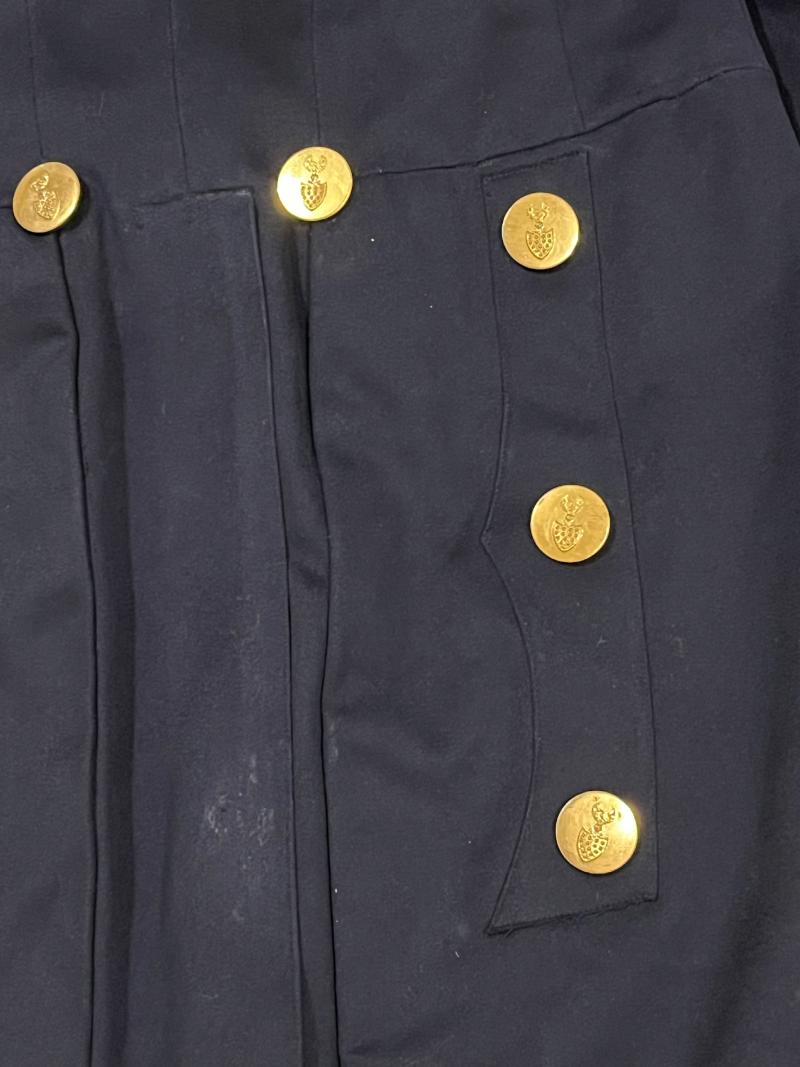
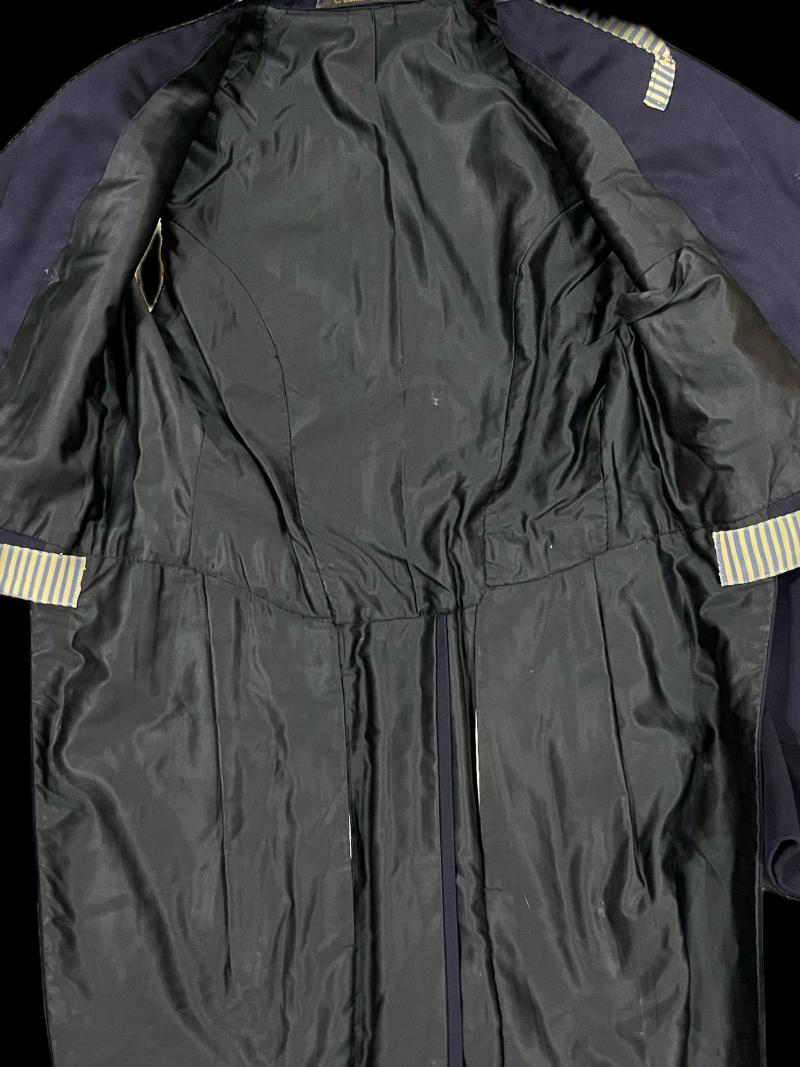
VERY RARE GERMAN REICHS CHANCELLOR BERNHARD V. BULOW FRACK AND HAT
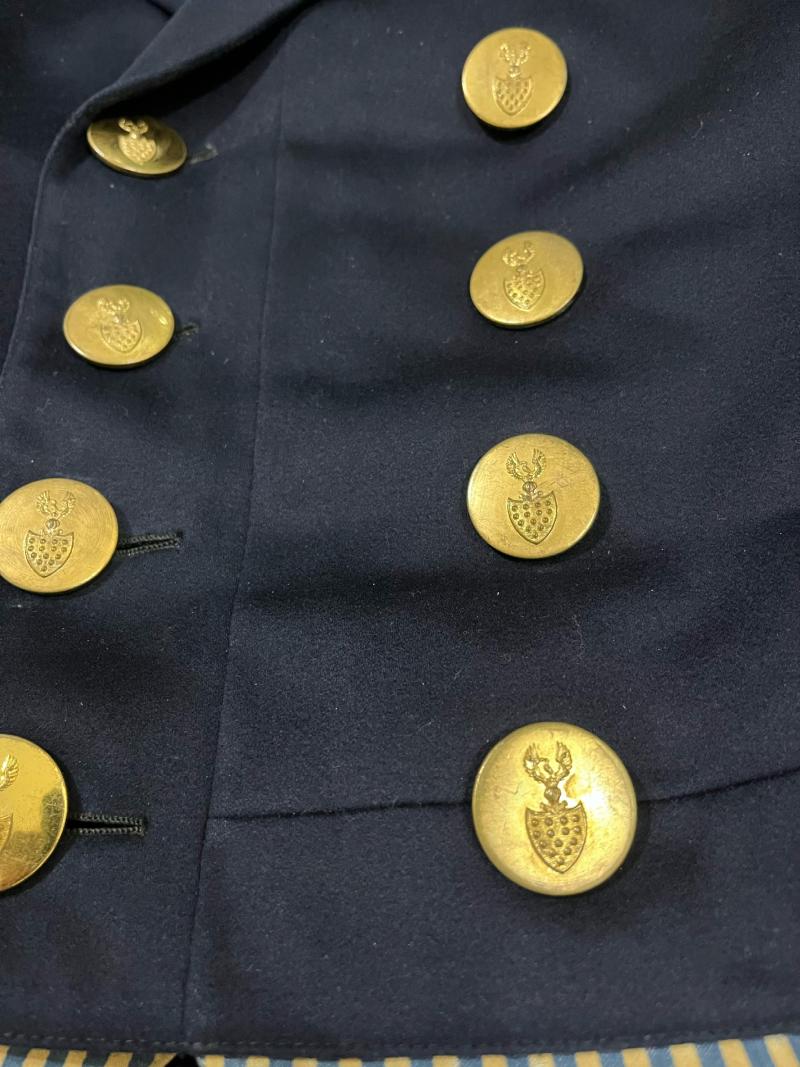
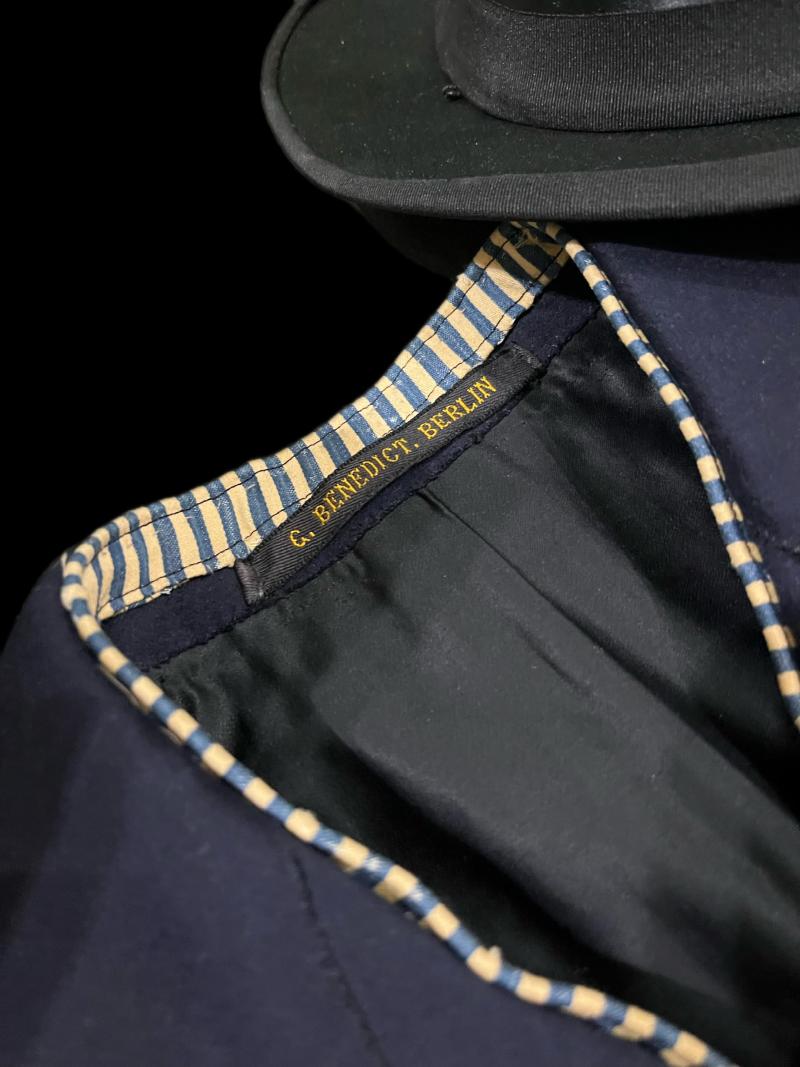
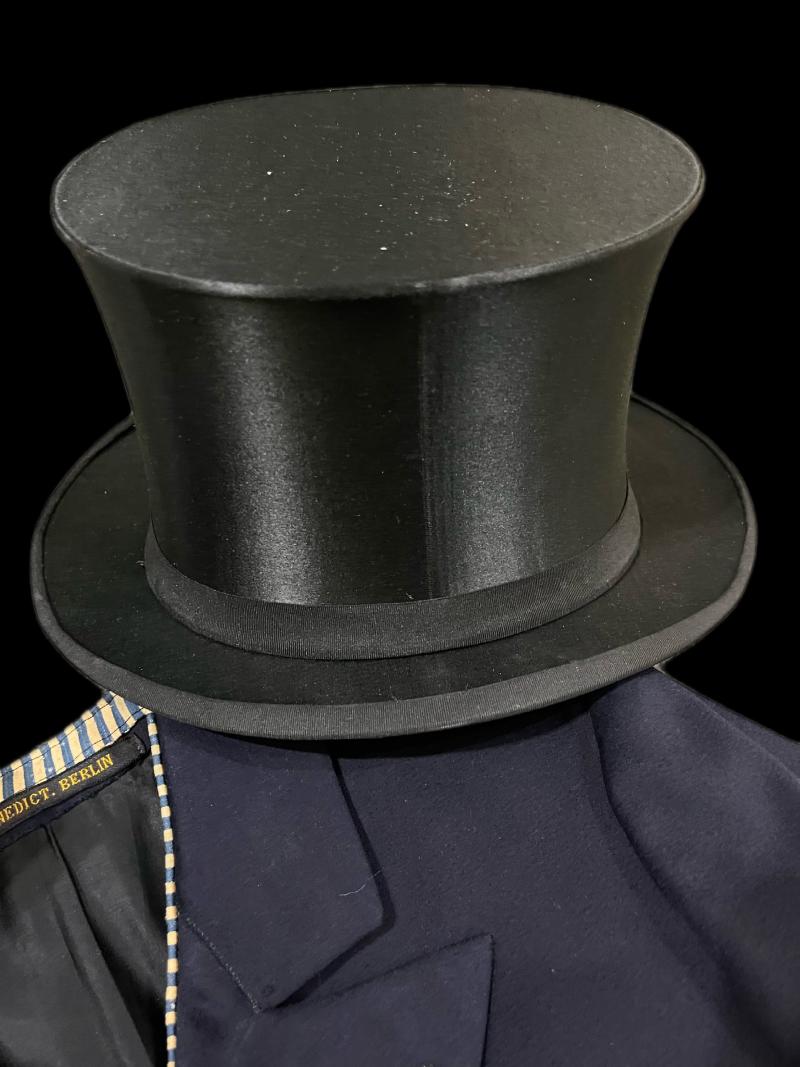
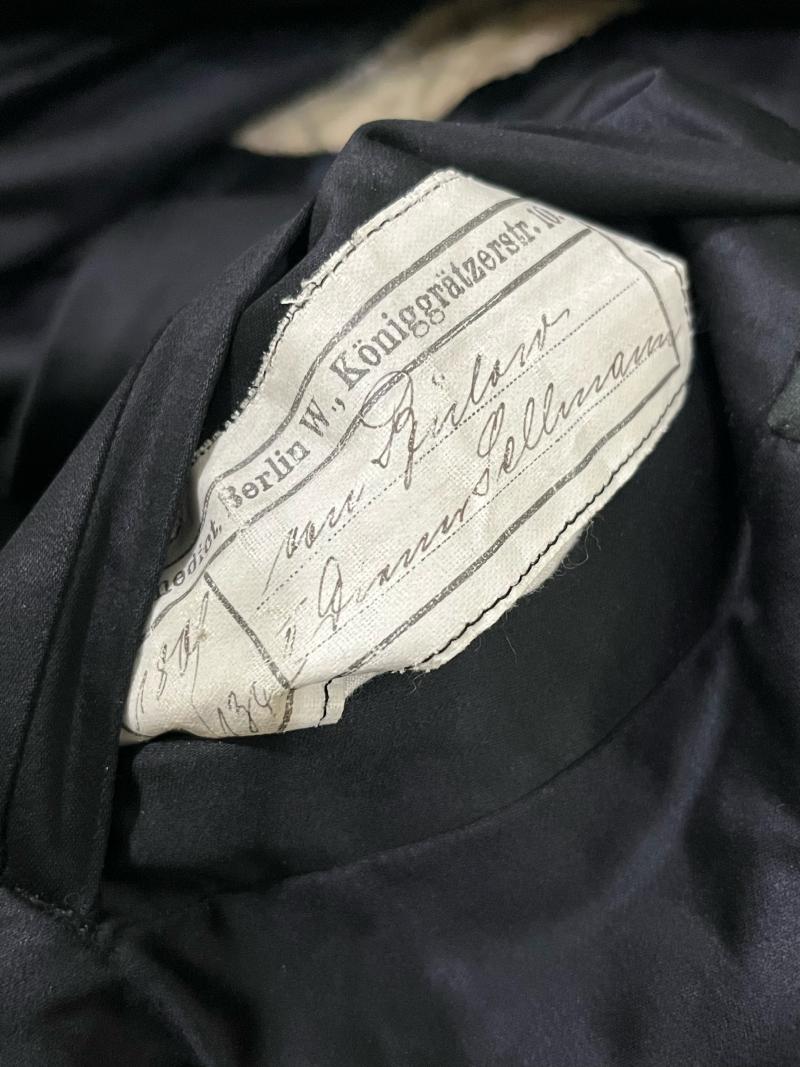
This is a very rare German Reichs Chancellor Bernhard V. Bulow frack and hat, who served as Reichs Chancellor from 1900 to 1909, the tunic is made by G. Benedict.Berlin and is fitted with Bernhard V. Bulow Buttons with his family Crest on each button, also named to him on the inside pocket and dated 1897 just before he became Chancellor of German, the hat comes in its original box which is maker Klapp-Hut Marke Elefant and in fantastic condition.
Bernhard Heinrich Karl Martin, Prince of Bülow (German: Bernhard Heinrich Karl Martin Fürst von Bülow, 3 May 1849 – 28 October 1929) was a German politician who served as the imperial chancellor of the German Empire and minister-president of Prussia from 1900 to 1909. A fervent supporter of Weltpolitik, Bülow devoted his chancellorship to transforming Germany into a global power. Despite presiding over sustained economic growth and major scientific breakthroughs within his country, his government's bellicose foreign policy did much to antagonize France, Great Britain and Russia thereby significantly contributing to the outbreak of World War I.
Born into a prominent family of Danish-German aristocrats, Bülow entered the German foreign service after his father, Bernhard Ernst von Bülow, was appointed foreign secretary in Otto von Bismarck's government. He held several diplomatic posts, including German ambassador to Rome, before being appointed foreign secretary in 1897 by Wilhelm II. Three years later, he was appointed chancellor following the resignation of the Prince of Hohenlohe.
As chancellor, Bülow promoted cautious and conservative domestic policies while pursuing an ambitious and expansionist policy in foreign affairs. His open challenge to France's growing control over Morocco sparked the First Moroccan Crisis, which aggravated the French and the British and helped strengthen the Entente Cordiale. In 1908, Wilhelm's indiscreet remarks were published during the Daily Telegraph Affair, causing significant damage to German foreign relations and the Kaiser's prestige. Bülow was blamed for failing to prevent the blunder and, having lost the support of both the Kaiser and the Reichstag, he resigned in 1909 and was succeeded by Theobald von Bethmann Hollweg.
Bülow moved to Rome after his resignation. He came out of retirement in late 1914 to serve as interim ambassador to Italy, but was unable to bring King Victor Emmanuel III to the side of the Central Powers. Bülow died in Rome in 1929 at the age of 80.
Code: 10052
14995.00 GBP